|
|
|
|
|
|
|
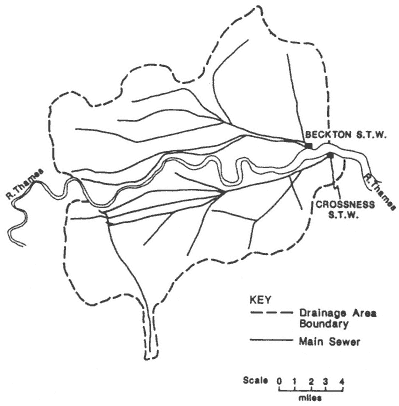
Figure 8.1
Plan of London's sewerage, showing the main sewers and the
drainage areas of Beckton and Crossness
sewage treatment works |
|
|
|
|
|
|
|
|
nuing outbreaks of cholera, and the foul smelling river in the 1850s, led to the implementation of a sewerage scheme designed by Sir Joseph Bazalgette. Main interceptor sewers were constructed to collect flows which had previously entered the Thames in central London, and to convey the sewage east to outfalls at Barking and Crossness, some distance downstream of the city centre. This remains the basis of the London sewerage system to this day, as shown in Figure 8.1. |
|
|
|
|
|
|
|
|
Work on Bazalgette's scheme for London was completed in the 1870s, but it was not until the late 1880s that any treatment was provided at the outfall sites. Worth and Crimp (1897) described the construction and operation of precipitation channels at Barking and Crossness, and the commissioning of sludge vessels to dump the resulting sludge out at sea. The extent of treatment provided was later increased to include biological stages. The latest development, resulting from the ban on sludge dumping to |
|
|
|
|
|